Technical guides
Rubber, ceramic or polyurethane: which lining your slurry line needs
An unlined slurry line does not wear evenly: it opens at the elbow, at the pump discharge and wherever the flow changes direction. The lining is not chosen for the pipe, it is chosen for what happens inside it.
There are two different wear mechanisms and confusing them is the expensive mistake. One is impact: coarse particles striking the wall at an angle. The other is sliding erosion: fine particles scouring the surface at high velocity. Each mechanism calls for the opposite material, which is why no universal lining exists.
Rubber: it absorbs the blow
Rubber works by elastic deformation. When a coarse particle hits, the surface gives, returns the energy and the particle bounces off without tearing material away. That makes it the material for coarse slurry and impact transport: discharges, short-radius elbows, runs just downstream of a pump.
Its limit is twofold. First temperature, which in industrial-service rubber is modest. Second, fine angular particles at high velocity, which instead of bouncing cut the surface: there rubber scores and wears fast.
Ceramic: it resists scoring
Ceramic does the opposite. It is extremely hard and will not be scratched, so it dominates where wear is pure erosion: fine particles, high velocity, low angle of incidence. It also tolerates temperatures that rule elastomers out.
In exchange it is brittle under direct impact. A hard strike from a coarse particle chips it, and once a piece has broken away, wear accelerates in the gap. Putting ceramic where there is impact trades a slow problem for a sudden one.
Polyurethane: the middle ground, with weight in its favour
Polyurethane offers better abrasion resistance than rubber under sliding erosion while keeping much of its ability to absorb impact. It is lighter than ceramic, which counts when the spool is mounted at height or handled with limited equipment.
It is the sensible option when the service is neither clearly impact nor clearly erosion — which covers most real cases.
Geometry matters as much as material
On a straight run the flow is parallel to the wall and wear is slow. In an elbow the particle strikes the outer radius at an angle, and that is where nearly all of the line’s consumption concentrates.
That is why a well-resolved line does not carry the same lining end to end: straight runs can take one material and elbows and special pieces another, more impact-resistant one. Specifying everything the same either overprices the straights or underspecifies the elbows.
Flanged spools, not pipe cut to fit in the field
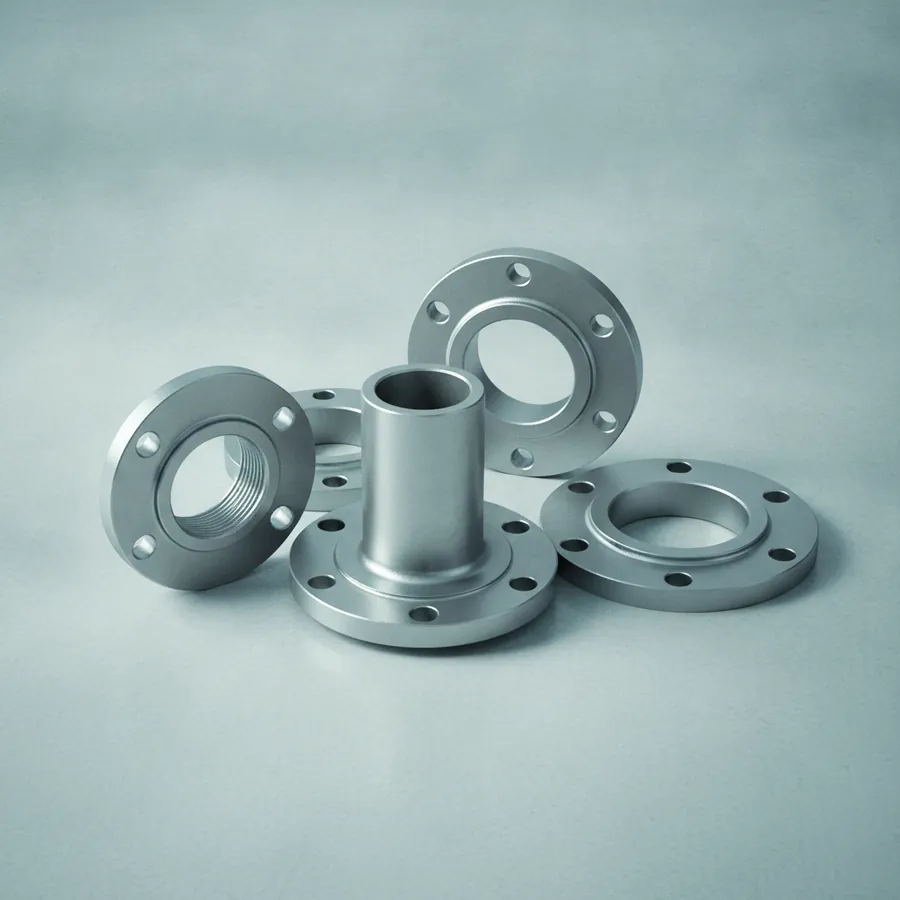
Lined pipe is fabricated as spools flanged at both ends. It bolts straight into the line and is replaced piece by piece when due, with no cutting or welding over a lining that heat would ruin.
That has a planning consequence: spools are made to the assembly dimensions, so the isometric drawing or field measurements have to exist before quoting. This is not shelf material.
What is needed to quote it properly
- Particle size and, if known, the percentage of solids.
- Flow velocity in the line.
- Operating temperature.
- Diameter, flange class and length of each spool.
- Which pieces are straight and which are elbows or specials.
- Whether there is aggressive pH on top of abrasion.
With that, each piece gets the lining it needs instead of an average that runs long on some sections and short on others. The difference is measured in months of line life.
Frequently asked questions
It depends on the wear mechanism. With coarse particles and impact, rubber lasts longer because it absorbs the energy. With fine particles at high velocity, ceramic lasts longer because it will not be scratched. Asked without the service, the question has no answer.
Not over the lining: heat destroys it. That is why it is fabricated as flanged spools that bolt in and are replaced bolted, with no hot work on the piece.
Yes, and it is usually the right call. Elbows and pieces where the flow changes direction concentrate the wear and can take a different material from the straight runs.